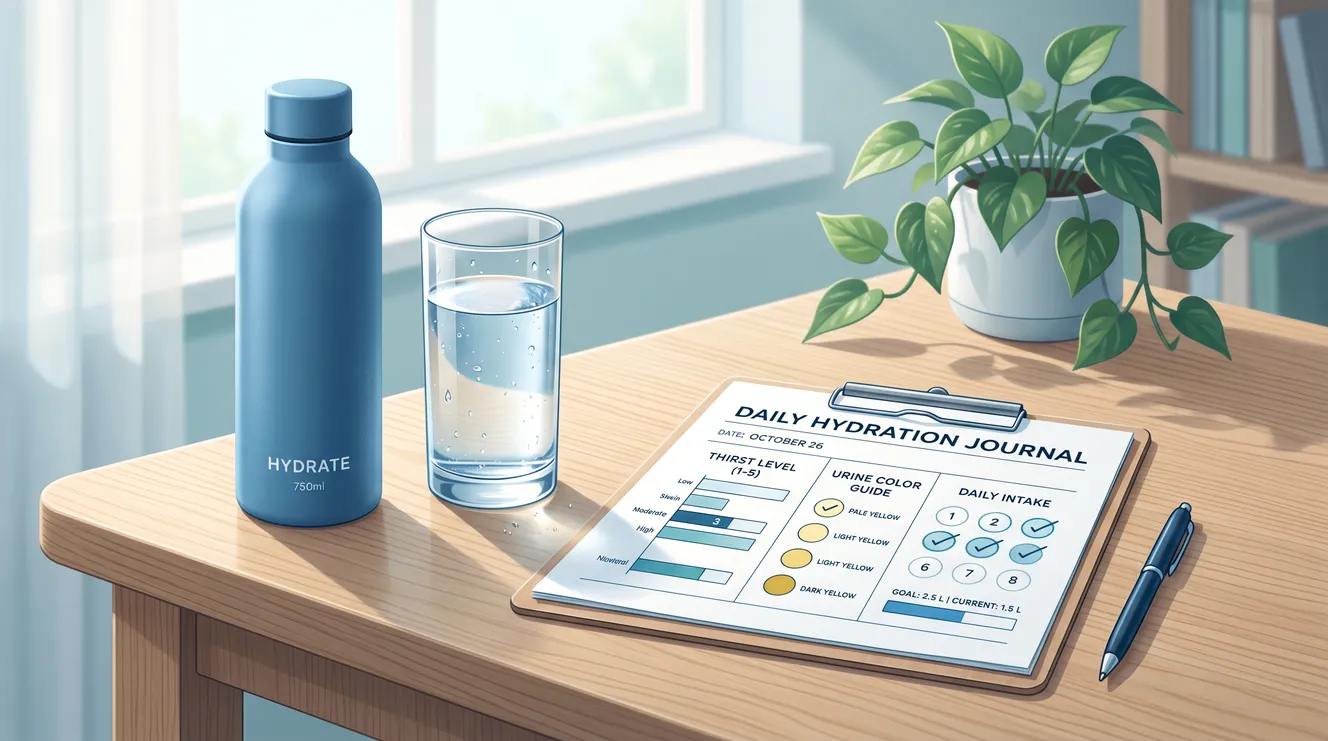
The hydration industry is a masterclass in manufactured anxiety. National Geographic documented how common myths—like the idea that only plain water counts, or that coffee dehydrates you—persist despite decades of contradictory evidence. Meanwhile, the global bottled water market has swelled to over $243 billion, with brands selling oxygen-rich, alkaline, and vitamin-fortified varieties that promise benefits the science rarely supports. Industry analysis shows that per-capita bottled water consumption in the U.S. jumped 187% between 1999 and 2022, driven less by thirst and more by the perception that tap water is somehow inadequate. The result is a population that is not necessarily healthier, but is definitely more anxious about a liquid they have been drinking their entire lives without instruction.
What follows is a plain-spoken look at what actually matters. No miracle claims. No disease prevention. Just the difference between hydration as a biological baseline and hydration as a lifestyle product. If you have ever wondered whether you really need that third bottle before lunch, this is for you.
The 8×8 Myth: A Recommendation Without a Study
The most durable hydration myth is the simplest: eight 8-ounce glasses of water per day. It is easy to remember, easy to repeat, and completely unsupported by the research that supposedly created it. A historical review in PMC traced the origin to a 1945 U.S. Food and Nutrition Board recommendation that suggested 2.5 liters of fluid daily—but explicitly noted that most of this quantity was already contained in prepared foods. That critical footnote was lost over decades, and the public conflated “total fluid from all sources” with “eight glasses of plain water.” By the time the myth was widely debunked in the early 2000s, it had already become cultural scripture.
The reality is more individualized. Mayo Clinic notes that total fluid needs for healthy adults range roughly from 11.5 to 15.5 cups per day, but that total includes water from food and all beverages. Cleveland Clinic adds that about 20% of daily fluid intake typically comes from food. A single serving of watermelon, a bowl of soup, or a cup of yogurt all contribute to the total. The 8×8 rule ignores this entirely, treating hydration like a bank account that only accepts one currency. It is not wrong to drink eight glasses. It is wrong to believe you have failed if you do not.
The “More Is Better” Trap and the Quiet Risk of Overdoing It
If the 8×8 myth created a floor, social media created a ceiling that keeps rising. Gallon jugs, hourly sips, and “hydration challenges” treat water like a supplement where megadoses must be superior. They are not. National Geographic clarifies that overhydration—drinking more fluid than the body can flush—can lead to hyponatremia, a condition where sodium levels drop dangerously low. Symptoms include nausea, headache, confusion, and in severe cases, seizures. While rare in everyday life and more common among endurance athletes, the condition proves that water is not automatically harmless in unlimited quantities.
The kidneys of a healthy adult can excrete excess fluid, but they work at a finite rate. Chugging a liter in ten minutes is less useful than sipping steadily across the day because the body cannot absorb and utilize a sudden flood. Nutrition researchers recommend consistent sipping over guzzling, which ensures better absorption without overwhelming the body’s regulatory systems. The “more is better” crowd often misses this nuance. They celebrate volume when biology rewards consistency.
Coffee, Tea, and Food: The Hydration Credits Nobody Counts
One of the most persistent myths is that caffeinated beverages do not count toward hydration because they are diuretics. This is false for moderate consumption. National Geographic summarizes that coffee and tea are made primarily of water, and studies have found no evidence of dehydration with moderate caffeinated coffee intake—up to four cups a day. The mild diuretic effect of caffeine does not offset the fluid delivered by the beverage itself. For regular coffee drinkers, the morning cup counts toward the daily total, full stop.
Food is the other invisible source. Nutrition experts note that about 20% of fluid intake comes from foods with high water content—fruits, vegetables, soups, stews, yogurt, and smoothies. A cucumber is roughly 96% water. A bowl of oatmeal cooked with milk is a fluid-delivery system disguised as breakfast. Sparkling water and seltzer also hydrate as effectively as still water, though carbonation can be harsh on sensitive teeth if consumed in extreme volume. The point is not to abandon plain water. It is to recognize that hydration is a portfolio, not a single stock.
The Tracking Industrial Complex: When Apps Create the Problem They Solve
Hydration apps and smart bottles are engineered to make you aware of a deficit you did not know you had. They send reminders, grow virtual plants, and award badges for hitting arbitrary targets. The question is whether this awareness improves your life or simply adds another variable to worry about. Reviews of popular hydration apps note features like weight-tracking integration and “skinny” branding that conflate water intake with body image. Others require subscriptions to unlock basic analytics. The business model depends on your continued anxiety, not your sustained health.
The tracking itself can become counterproductive. When you force water to hit a number, you override your body’s own signaling. Thirst is not a failure of discipline. It is a regulatory mechanism that has kept humans alive for millennia. Physiological research confirms that thirst is the primary driver for fluid intake, triggered by the brain’s monitoring of blood osmolality and blood volume. In healthy adults, this system is accurate and responsive. The app that tells you to drink at 2:00 PM regardless of whether you are thirsty is not augmenting your biology. It is overriding it with a marketing schedule.
The Bottled Water Marketing Machine
Much of modern hydration anxiety is not organic. It is manufactured by an industry that profits from the perception that tap water is suspect. Industry data reveals that bottled water became the most favored beverage in the United States in 2022, with sales of nearly 16 billion gallons. Brands market their products with labels like “oxygen-rich,” “alkaline,” “spring,” and “vitamin-rich,” creating differentiation in a product that is chemically nearly identical at the source.
The premium sparkling water category alone has 39% penetration in the U.S., heavily skewed toward younger consumers. Marketing analysis shows that the industry thrives on convincing consumers that bottled water is purer, safer, and more healthful than what comes from the tap—despite the fact that municipal water in most developed regions is rigorously tested and often held to stricter standards than bottled alternatives. The hydration hype is not a public health campaign. It is a category expansion strategy.
What Is Actually Worth Tracking? Three Simple Indicators
If you strip away the apps, the bottles, and the branded challenges, hydration monitoring collapses to three indicators that require no subscription and no Bluetooth connection. They are not precise, but they are sufficient for most people living ordinary lives in temperate climates.
Indicator One: Thirst
Thirst is not a lagging indicator of disaster. For most healthy adults, it is a reliable, real-time signal. Physiological research emphasizes that the body’s water balance is regulated within a remarkably narrow margin, and thirst is the primary mechanism that maintains it. Drink when you feel thirsty. Stop when you do not. The system works unless you are deliberately ignoring it for hours at a time.
Indicator Two: Urine Color
The color check is the original hydration tracker, and it is free. Nutrition guidance from EatRight.org suggests pale yellow urine as a general indicator of adequate fluid intake, while dark yellow or amber suggests you may need more. Completely clear urine, conversely, can indicate you are drinking more than necessary. This is not a medical diagnostic. It is a rough gauge, like checking the oil in a car. You do not need a digital sensor for this.
Indicator Three: How You Feel
Headaches, sluggishness, dry mouth, and lightheadedness can all be associated with low fluid intake. They can also be associated with poor sleep, stress, caffeine withdrawal, and a dozen other factors. But if you notice these symptoms clustering on days when you have been too busy to drink anything, that is useful pattern recognition. Harvard Health lists warning signs like dark urine, weakness, dizziness, or confusion as cues to pay attention to fluid intake. The key is correlation over time, not panic over a single afternoon.
The Contexts Where Tracking Actually Helps
Despite the skepticism above, there are legitimate contexts where paying closer attention to fluid intake makes sense. The key is that these are situational, not universal. You do not need to track water every day of your life. You need to be aware during specific windows when the body’s normal signals are disrupted.
High heat and humidity increase sweat loss, which means your usual drinking patterns may fall short. Mayo Clinic notes that hot or humid weather increases fluid needs, as does high altitude. Intense physical activity for more than an hour also shifts the equation, especially if you are sweating heavily. Alcohol consumption is another context where intentionality matters, since alcohol suppresses the antidiuretic hormone and increases fluid loss. A glass of water alongside your drink and another before bed is not a wellness trend. It is simple arithmetic.
For most people in temperate climates, working sedentary or moderately active jobs, none of this requires an app. It requires a full water bottle on the desk and the habit of sipping when thirsty. The bottle is a visual cue, not a measuring device. When it is empty, refill it. When you are not thirsty, stop. The simplicity is the feature.
The No-Plan Plan: A Hydration Framework for Skeptics
If you are exhausted by the hydration conversation, here is a framework that requires no tracking, no targets, and no premium water. Start the day with a glass of water because you have just gone eight hours without any. Keep a bottle or glass visible at your workspace because out of sight is out of mind. Drink with meals because food and fluid naturally pair. Eat water-rich foods—fruit, vegetables, yogurt, soup—because they count and they add variety. When you are thirsty, drink. When you are not, do not force it. Before bed, have a small glass if you want one.
That is the entire system. It will not generate social media content. It will not unlock badges. It will not justify a $40 smart bottle. But it will keep you adequately hydrated without turning a basic biological function into a part-time job. Physiological research confirms that in healthy adults at rest, fluid intake driven by thirst and mealtime beverages is sufficient to maintain normal hydration status day to day. The body is not a leaky bucket that needs constant topping off. It is a regulated system that knows what it is doing if you let it.
Drink Water. Do Not Worship It.
Hydration is not a lifestyle brand. It is not a competitive sport. It is not a metric by which to judge your discipline or your worth. It is the simple act of replacing the fluids your body uses to breathe, think, and move through the day. For most healthy adults, that replacement happens naturally if you respond to thirst, eat a varied diet, and keep a drink within reach.
The hype wants you to believe you are behind. That your tap water is suspect. That your coffee cancels itself out. That you need a third-party app to interpret a sensation humans have managed for millennia. None of this is true. The 8×8 rule was a footnote that became a commandment. The bottled water industry is a perception business. The tracking apps are anxiety generators with cute icons.
Put down the gallon jug. Look at your urine if you are curious. Drink when you are thirsty. Eat a cucumber. Have the coffee. The hydration conversation has become far more complicated than the biology ever was. Simplify it. Your body already knows what to do. Let it.